
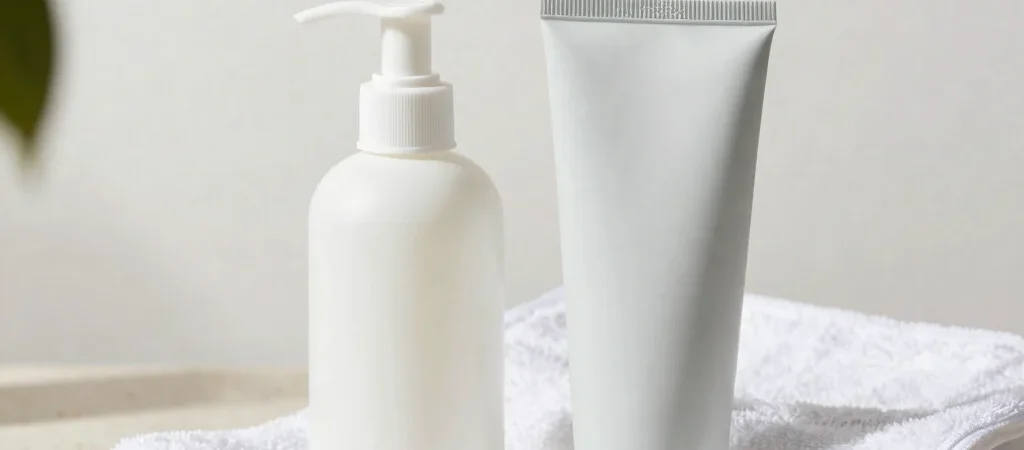
Two moisturizers can make similar promises and feel completely different on the face. One may settle quickly under sunscreen; another may leave a cushiony layer that feels better at night. The useful question is not which texture is best in general, but which one you’re most likely to use comfortably and consistently.
Match texture to timing
If you want a moisturizer to sit under sunscreen or makeup, consider how quickly it absorbs and whether its finish works with the next step in your routine. A lighter lotion or gel-cream may feel less noticeable to some people, while a richer cream can be appealing when you prefer more substantial skin feel. Neither texture alone tells you how well a product will suit your skin.
Think about the setting, too. A tube in a gym bag, a pump beside the bathroom sink, and a jar you use at night each have practical trade-offs. Packaging is not a measure of formula quality, but convenient directions and a texture you like can make a moisturizer easier to reach for.
Use the ingredient list
Glycerin is a humectant commonly used to help draw water into the outer layers of skin, while ingredients such as petrolatum can help reduce moisture loss by forming a protective layer. Ceramides are also used in moisturizers, often alongside other ingredients in the formula. Their presence can help explain a product’s design, but one ingredient name cannot predict how the whole formula will feel on you.
Compare the full ingredient list rather than relying on a headline ingredient or claims like “for all skin types.” If you already know that a certain ingredient or fragrance doesn’t suit you, check whether it appears on the label. When trying something new, using it as directed and changing one product at a time can make it easier to notice how it fits into your routine.
Make room in your routine
A moisturizer should have a clear place in your day: after cleansing, before sunscreen in the morning, or as a comfortable final layer in the evening. If it pills with the products you already use or feels unpleasant after application, that matters more than a polished claim on the carton. A useful recommendation explains those possible trade-offs instead of promising a universal match.
Glow Guide may earn a commission when readers purchase through affiliate links. We aim to explain what a recommended product is meant to do, how its ingredients and texture may fit a routine, and who may want to compare other options before buying.

